
E-lectric and a lot of Cloud

India’s thirst for EVs (Electric Vehicles) received a major push in India’s Union Budget of 2019-20, and is expected to improve further in the budget of 2020-21 and thenceforth.

In March 2019, India’s union cabinet approved setting up of a National Mission on Transformative Mobility and Battery Storage, to drive clean, connected, shared, sustainable and holistic mobility initiatives. The proposed capacity target for lithium-ion battery-manufacturing base has been raised to 50GW from 40GW. The government is in the process of tendering for set up of 50GW battery manufacturing base at around US$50 billion investment.

While this is good news, there is total ignorance among majority of general public.

“At Mahindra AGM our shareholders asked us when are we getting into EVs. If after producing and selling EVs for 9 yrs, after having 5,000 eCars on the Indian roads, after 135 M eMiles behind us if our share holders don’t know that we make EVs, we have failed in our communication,” said Dr Pawan Goenka, the head of Mahindra, a day after the recent AGM in Mumbai. Mahindra have the most diversified indigenous range of e-auto products in India currently – the sedan E-verito, e-Supro minivan and E2O+ Hatch as also 3-Ws Treo and e-Alfa mini. Mahindra is setting up an advanced Lithium-ion battery plant along with the Korean LG Chem at Chakan near Pune – half-a-million modules per year.

Indian rules say that assembling cells within the geography of the country is enough to quality under Make-in-India. This means, the cells are imported – largely from Taiwan and China, and doesn’t have the competence to manufacture the cells itself. The recent COVID-19 situation and resultant lockdown in China has led to severe shortages of various types of rawmaterial used in a wide variety of industries, including EVs – prompting Mahindra to state that BSVI roll-out would be delayed, while mobile companies said they could shut for at least a 10 days – if things don’t improve at China and components supply is hampered further.

In an already weak manufacturing situation (Auto sales down ~40% in 2019-20), this is the last thing that industries had expected / wanted. But viruses have a mind of their own, and our minds are clouded. This was an opportunity for Indian industries to step-up and grab their share of the global market. Well, elephants seldom dance, let alone fly, and panic when in stress; Elephants are cute and majestic, though!

A lithium-ion battery accounts for 40% of the total cost of an EV. Toshiba-Denso-Suzuki JV has invested in a 1,100 cr lant in Gujarat for Li-ion batteries. Panasonic plans to step into this field as well. an EV battery manufacturing set-up could cost ~200 crores, which only deep pockets can afford. While collaboration could mitigate the technology development costs, everyone prefers to climb the wall to discover the struggle for themselves. Mahindra on its part is willing to find synergies with Tata Motors.
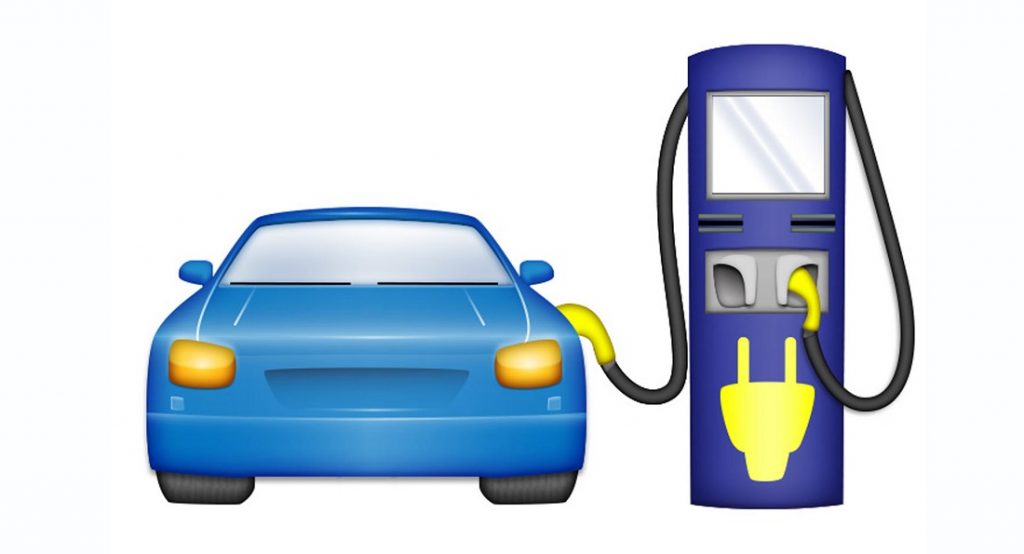
EVs must fire-up before losing charge

The recent Auto Expo 2020 at Noida in Feb, threw up 18 EV startups and their wares – autos, mopeds, bikes, scooters and a Bus. Of all, only one was Arai certified, the rest being concepts. AutoExpo 2019 had 11 startups, but majority of them haven’t seen significant growth nor have captured the market.

Large Auto companies – Mahindra, Tata motors, Maruti and Volkswagen too displayed their current options and concepts; remains to be seen how these get accepted by the public. In the period Apr-Dec 2019, only 1,554 4W EVs were sold! A host of launches were made by Kia, Tata and Hyundai, and their marketability remains to be seen, in the tepid waters. The fate of EVs from BMW, Mercedes is anybody’s guess. An improvement in the EV market was the jump in sales – 2017: 56,000 EVs, 2018-19: 759,000 EVs – mostly in 2W and 3W. The crux is – individual 4W-EVs sales is not forging ahead as anticipated and the current numbers are largely of call-rider companies purchases. Experts believe that current crop of 4W-EVs are at best a second car, and the first time buyer or first choice of car still will continue to be powered by fossil-fuel. How many can afford a Tesla Electric in the world?

Hero Electric (11 2W-EV models!) is gingerly testing waters; Bajaj went retro and announced an Electric version of the legendary Chetak (remember Buland Bharat ki Buland Tasveer? but how Hamara will this Bajaj be, with Rajiv hating the e-word). Elsewhere in the globe, Sony built a Vision-S car; so why not our own Micromax build a Revolt bike? Should big boys have all the e-fun?! Yulu is a flimsy moped, but it is in shared rides cocoon with limited mobility, I was petrified riding one for 300-mtrs at a stretch. Then there are the Okinawa, Battre, Ultraviolette, Tork… all e-attempting. There is a star, though, in Ather, powered by ex-Flipkart’s Bansals, Tiger Global and Hero Motocorp, which seems to be leading in the 2-W market for now, and intends to invest Rs 635 crores for a manufacturing plant at Hosur, which will double their current capacity of 40,000 2-W-EVs pa., and have reportedly invested in putting-up 40 public charge stations in Bangalore and Chennai.

Given the cost of charging infrastructure, Govt needs to step in to bolster this critical public infra countrywide (2,346 charging stations in 24 states is a slow start), if it is serious about 2030 deadline (hope it doesn’t peter out like the recent Plastics Ban fiasco!). At present, at SMEV there are 28 EV manufacturing companies in their fold while the rest of the total 72 members are into components alone. https://www.smev.in/smev-members. Can a startup rise to manufacture charging stations in India? An exuberant elephant calf, perhaps?

How green is my power? If fossil fuels are responsible for increase of CO2 in the atmosphere, Coal is a co-culprit with 40% contribution. Besides, when burnt, coal produces pollutants like sulfurdioxide, mercury, and particulate matter which result in acid-rain and damage the environment. Not to mention serious ecological damage done to the forests due to mining and transport. In India, 62.80% is generated by thermal plants, Hydro and Nuclear provide 12 and 2% respectively, while Renewable power is a healthy 23%.

Alternate energy: When we talk of energy sources like Hydel, Solar, Wind and Nuclear energy, they seem to be the best solution. But are they? It is laudable that UN sees India leading the global thrust, but it still doesn’t feature in the list of top 10 countries that are ready to transition into a secure, sustainable, reliable, and affordable alternate energy future. According to WEF, 81% of global energy systems is still dependent on fossil fuels and so is India. Solar panels have a life of say, 25 years, with diminishing performance and degrading of panels; then what? What to do with these panels… manufacturers like Tata Solar, Vikram, Emvee, have no clue, yet. US and Europe are in planning stages with pilots running. Though the panel (made of glass, silicon, plastic and aluminium) is recyclable, it is difficult to extract the web of metals to reuse, and could end up in landfills; but then – where is so much of land? Wind Farms are falling out of favour – with erratic wind patterns, poor generation and transmission losses, maintenance glitches, high initial infra cost coupled with mounting financial burden, not to mention damage to sensitive eco-system in remote areas (dizzy wild animals, dying bees, et al). EV’s batteries are made largely of Lithum which is again a mined RE metal with limited resources worldwide.

Clear Policies: Indian Govt specifically needs to focus on reducing imported parts for EVs if the local industry (already reeling on slackened auto market) has to find their mojo once again. Incentivising home-production and increasing duty on imported CBUs, parts and components, will be a good start – given that EVs require ~800 lesser auto-components than conventional ones (a survey in Germany found out and that it could also mean a million-job-loss). Increasing common charging points in public spaces, a specific policy for end of life battery cases and solar panels that cannot be recycled must be put in place forthwith, or else we will be filling the Earth with more toxins and rare-earth substances in an effort to save fossil fuels!

Alternate Green energy: ET Energy quotes TERI in a recent article, that India’s 18 sq km surface area of reservoirs has the potential to generate 280 GW of solar power, using floatovoltaics; this report was tabled at the recent World Sustainable Development Summit 2020; given the high costs of land acquisition this seems to be an alternate to generating green-energy. China, Japan and South Korea are said to be leaders of this floating-power-generation technology, while UK has the world’s largest farm. Floating Solar Farms, of 50 MW to shortly take-off in Kerala by National Hydro Power Corpn; but before rushing to establish this unique tech, must consider possible ecological damage to the biodiversity and aquatic life. In a study of one such farm by Kyocera TCL Solar LLC at the Yamakura Dam reservoir in Japan found reduction in algal blooms reduced evaporation of water, and the blocking of UV rays, while being difficult to maintain and prone to damage, but on the plus side, the panels generated more power being cooled by the waters below.

All in all, a holistic approach is necessary to:

  1. Conserve Fossil fuels, reduce dependency
  2. Limit environment pollution, preserve natural resources, restore ecology
  3. Devise concrete plans for alternate energy sources
  4. Clear road-map for Electric vehicles and public e-Charging infra
  5. Wean away from external dependence for parts and components
  6. Allow for healthy co-existence of conventional and EVs
  7. Promote clean affordable energy
  8. Policies for recycling end-of-life products

Views are own; info from various sources including domestic and international Media, MNRE, Govts, UN, UNEP, WEF
Food – Hunger and Waste

There is enough food for everyone, but not everyone has enough food.

The world produces food to feed twice the current population; ironically, food waste causes billions of people to remain hungry and are malnourished. On average, about one-third of food produced globally is lost or wasted (UN-FAO). Every year on October 16, about 150 countries celebrate the World Food Day to mark founding of the Food and Agriculture Organization (FAO) of the United Nations in 1945, that’s that.

The second most populous country and second largest producer of food in the world – India – is home to 1/3rd of world’s hungry. By 2050, the population of India is estimated to reach 1.63 billion, overtaking the population of China. 34.5 % of the population is urban (471,828,295 people in 2019). The numbers are huge and therein lies a definite issue – the increasing need to scale up production, burgeoning consumption, waste, inequalities, hunger, and diminishing resources, destroyed natural habitats, geographical spread…

Food waste and loss amount to a reckless misspend of resources such as water, land, energy, labour and capital. UN estimates that 40 percent of the food produced (67 million metric tonnes) is either lost or wasted; 1.3 metric giga-tonnes of edible food is wasted worldwide per year.  This food wastage however, isn’t limited to one level alone but perforates through every stage; from harvesting, processing, packaging, and transporting to the end stage of consumption. Global food wastage accounts for 6.7% of greenhouse gas emissions.

The problem is, significant amount of food wastage occurs because of gaps in the logistics supply-chain (50% lesser cold storages in the nation to store fresh farm produce), and also due to excesses in consumption and unhindered disposal – which end-up in landfills or composted. GoI informed Parliament that over 11,889 tons of foodgrains were rotten at various centers of the Food Corporation of India FCI) in 2016-17. The estimated cost of this wastage is ~Rs 1 lakh crore.

34 out of 1,000 children born in the country die in the mother’s womb itself. 9 million children below the age of five die much before they can comprehend the meaning of independent India and ~200 million of our population sleep hungry on any given night. 3,000 children die of mal-nutrition everyday. But the problem is not just the food that’s wasted when leftovers go in the trash. It’s also all of the greenhouse gas emissions, water, biodiversity loss and soil & air pollution that was generated to create that food only for it to be tossed away unconsumed.

Wet-waste, kitchen waste, can be composted; but that wasn’t the purpose to cook food, right? Few statistics to put the waste problem into perspective:

  • 25% of fresh water used to produce food; equals to enough drinking water to 10 crore Indians p.a.
  • 300 million barrels of oil used to prepare cooked food.
  • 20% of all grocery and related purchases go into the waste
  • 21 million tonnes of wheat, 40% of fruits and vegetables, 30% of cereals go unused every year
  • 40% of cooked food (leftovers/excess cooked and plate-waste dumped into waste-bins
  • 15% of India’s population is under-nourished
  • 58% of all kids under 5 yrs are anaemic
  • 38% of kids under 5 yrs have stunted growth, which is 3% of global kid population
  • 21% of kids under 5 yrs are underweight and wasted (low weight to height ratio, debilitating muscle and fat tissue and hence a child is ‘wasted’)
  • 51% of women in the age-group of 15-49 are anaemic, resulting in 20% children born underweight
  • 20 crore Indians sleep hungry every day, of them, ~7,000 die of hunger
  • 830 million Indians survive on less than Rs. 20 per day
  • Hunger kills more people each year than AIDS, malaria and terrorism combined
  • 51 births occur each minute,  27 million per year.
  • 16.6 million added to the population per year.
  • 24 million children in the country are orphans, of which only 0.3% do not have both parents.

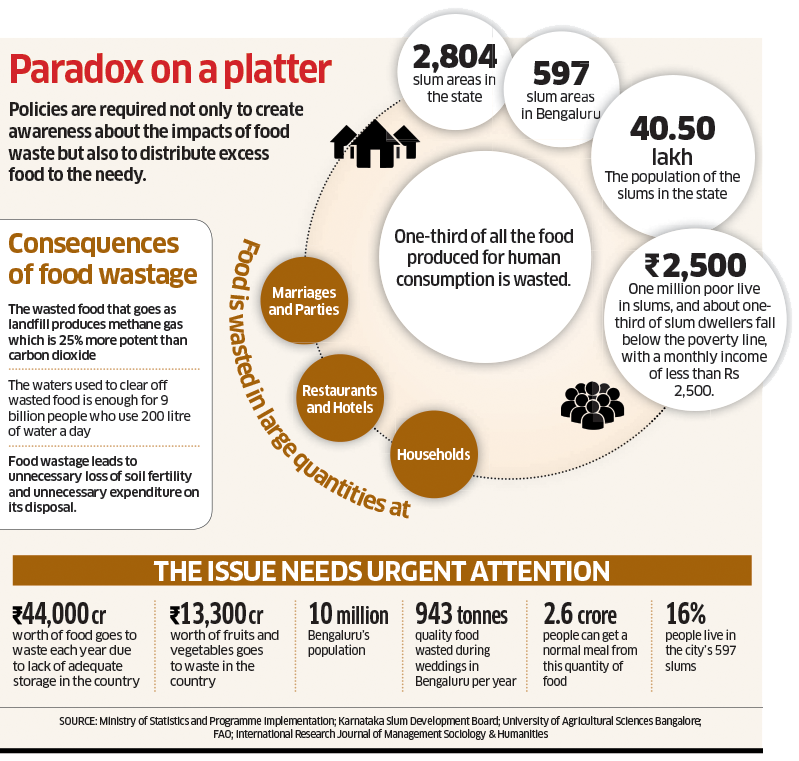
A team of 10 professors from the University of Agricultural Sciences (UAS), Bangalore, surveyed 75 of Bangalore’s wedding halls over six months; they recorded a wastage a whopping 943 tonnes of good quality food, enough to feed 2.6 crore people a regular Indian meal.

Feeding a Nation

Access to food is a challenge that GoI is tackling at its own pace. National Food Security Act (NFSA), 2013 provides for coverage of upto 75% of the rural population and upto 50% of the urban population, thus covering about two-third of the population of the country for receiving foodgrains @ of Rs. 3, 2 & 1 per Kg for rice, wheat & coarse grains respectively under TPDS.

  • The Indian Government on its part is fast-tracking enhancement of storage facilities across India to safeguard foodgrains.
  • Improving the PDS system to ensure that ~90% of Indian families in both urban and rural areas can have access to procuring essentials.
  • Contemporary research has confirmed the crucial importance of nutrition in the first 1,000 days of a child’s life. The nutrition provided in the period between conception and the child’s second birthday is critical for its optimum cognitive and physical development. Breastfed infants are more likely to have better physical and mental health, well into adulthood. ICDS or Integrated Child Development Services is setup to tackle the malnutrition malaise.
  • India’s mid-day meal scheme is the world’s largest Govt sponsored mass feeding program, with a budgetary allocation of 11,000 crores during 2019-20. This scheme covers 9.12 crore children of 11.35 lakh schools, 8.45 lakh kitchens, employing 25.95 lakh people from marginalized communities. This is aside to private organisations at various states covering ~50 lakh children.
  • The PM, sensing the problems of scale, had expressed concern about the population explosion, in his Independence Day speech of 2019; he even said – that those who follow policy of small family contributes to the development of the nation.

Minimizing edible food waste: Did you know – by segregating, recycling and composting, a family of 4 can reduce their waste generation from 1,000kgs to less than 100 kg every year?  Now, multiply this statistics with 1.3 billion population and imagine the result! Adopt a zero-waste-lifestyle – Buy less, cook as much is required, take lesser portions than you think you can eat and refill plate if necessary later. If you are left with cooked food, that isn’t stale, or anticipate excess leftovers at your event, please do seek out areas where underprivileged people live and share it with them; do not leave it to the caterer or event manager to ‘manage’ the waste. If you know of a hotel where food waste is an issue, connect them to an organisation who willingly takes away the edible food and distribute to the needy. a short list of organisations is below, and there could be many more local heroes who do this out of passion.

  • Feeding India               9871178810    www.feedingindia.org (pan India)
  • Robinhood Army                                 www.robinhoodarmy.com (pan India)
  • Lets Feed Bangalore                            www.letsfeedblr.com (Bangalore, fresh food only)
  • No food waste             9087790877    www.nofoodwaste.in (Tamilnadu)
  • Manav Charities          080-28386828 www.manavcharities.org (Bangalore)
  • Sumanahalli Society  9481085727    www.sumanahalli.net (Bangalore)
  • Feedthehungry           8971530638    Raghunandan, Bangalore.

List of organisations on IFSA (India Food Safety Alliance) Network – (20 States, 99 Cities, 4 Union territories), refer: https://sharefood.fssai.gov.in/agency-list.html

  • Sources researched for this article –
  • Pib.nic.in
  • Data.gov.in
  • Rchiips.org/nfhs/NFHS-4Reports/India
  • National Family and Health Survey 2015-16, Dec 2017
  • Mhrd.gov.in
  • Bhookh.com
  • Indiaspend.com
  • Indiafoodbanking.com
  • Indiaenvironmentalportal.org.in
  • sharefood.fssai.gov.in/
  • thebetterindia.com
Food Waste Graphic

SUSTAIN – Act Right

Reigning the monster

Come October 2, 2019 – Government of India is all set to ban single-use plastic in major cities, towns and villages, that rank among the world’s most polluted.

Items such as polythene bags, cups, tumblers, plates, 500ml bottles, straws, sachets, forks, knives and cotton ear buds, are all single use plastics. The ban on the first six items will clip 5% to 10% from India’s annual consumption of about 14 million tonnes of plastic, according to GoI estimates; curbs will also be on e-commerce companies to limit plastic packaging that makes up nearly 40% of the plastic industry. Cigarette butts also are on the anvil – yes, butts contain cellulose acetate, a plastic (not cotton) filter that’s not biodegradable and contains carcinogens from tobacco.

Solid waste management remains a grave challenge given the population and geographic spread; ~25,940 tonnes of plastic waste is generated daily of which 10,000 tonnes remains unsegregated ending up in landfills. In the last decade alone, the world has produced more plastic than in the last century.

Silent killers

While the global focus is on larger single-use-articles, items such as toffee/chocolate/biscuit wrappers, tetrapaks, toothbrushes, toothpaste tubes, razors, sachets that pack anything from chips to tobacco to tea/coffee powder / milk/oil/detergent/condiments/handwash/, even kids toys, footwear and plastic business cards, are silent killers tossed away without realizing their potential to damage our environment as much as plastic bags / straws. These articles were found to be the major cause of floods at various places in 11 states during recent monsoons, choking the storm water drains and sapping earth of permeability. Mumbai realized way back in 2005 when 315 people were killed due to stagnant water borne diseases following heavy rains and banned plastic bags but not enforced. Delhi followed suit in 2008, never enforced. It’s the same story in Bangalore, Shimla, Tirupati, Pune, Hyderabad, Kozhikode, and all over.

Returned with thanks

Plastics when discarded comes back to us. WWF’s research found that we consume ~250 gms every year. The plastic, the non-biodegradable material disintegrates into micro-particles. These particles leach into streams that water field crops, in our tap-water, and enter salt and aquatic animals from oceans, ultimately ending up on our plate. To know how much plastic we consume, watch yourplasticdiet.org.

The clothes we wear contain upto 60% of synthetic fiber, and estimated that a single load of weekly laundry wash+dry could release 700,000 fibers into water, detergent based pollution is a bonus Polyester fabric recycles once along with PET bottles into polyester yarn; the strands don’t hold well in more recyclings – ending up in landfills or burnt.

Oceanic choke

Great Pacific Garbage Patch is now dwarfed! Increasing evidence shows that all the oceans of the earth are polluted with discarded plastic items. The ocean with the largest amount of plastic is the North Pacific, followed by the Indian Ocean, the North Atlantic, the South Pacific, the South Atlantic and the Mediterranean Sea. Altogether, the 5 trillion pieces of plastic waste in our oceans weighs as much as 268,000 tons, which is equivalent to 38,000 African elephants. Indian Ocean ranks a high 2nd with 1.3 trillion pieces estimated.

Mountains too…

Himalayas, the majestic sentinels of India are ridden with plastic waste, 94% of which is single use plastic / packaging. ‘The Himalayan Cleanup’ was carried out in 12 mountain states of India on May 26, 2018 (Sikkim, West Bengal, Assam, Manipur, Meghalaya, Nagaland, Tripura, Mizoram, Arunachal Pradesh, Himachal Pradesh), involving ~15,000 volunteers of 200 organisations in 250 critical sites. In 2014, trekkers from Nepal removed ~25 tons of trash and 15 tons of human waste, and its increasing year on year.

We can!

Next time you go shopping, try these simple alternates – carry a cotton bag, a metal/glass water-bottle, use public transport, avoid munching on toffees/chips or sipping a tetrapak juice – if you must, hold on till you find a trash can. Look around to buy unpacked-clean groceries, buy natural fiber material / clothes, return plastic packaging from products you buy even from brand stores, its cool! Travel responsibly – carry a trash bag, do not throwaway disposables or broken / unusable items, carry water.

Sustainable Living

Adopting a sustainable lifestyle needs commitment – to explore, experiment, learn, practice continuity and above all, loving. Because beyond all of the frightening news; beyond the frustrating politics; beyond the failed national laws and international agreements, there is one question – how do you want to live your life? We can choose to feel defeated, helpless and frustrated; or choose to be grounded, purposeful and hopeful.

Love for all beings living, and thus living sustainably, requires a complete change in lifestyle, achievable by small simple steps – through the clothes we buy, the energy we use, the food we eat, even the toothpaste we brush our teeth, the soap we bathe with. We have learnt to adopt products and practices without realizing their impact; now that we know, it’s easy to re-adopt to earlier safe practices and clean products.

Every choice we make impacts others – through its creation, its distribution, its use and its disposal. Most likely we’ll never know – or even see – who we are impacting. But they are out there, nonetheless, suffering – or thriving – based on our choices.

Facts and figures collected from across wide web world. Credits at respective places.

Environment Day

It’s a fad nowadays to celebrate various ‘day’s, both national and international. Nevertheless, World Environment Day is special. Started in 1974, the initiative has grown into a world movement, spearheaded by the United Nations. The UN persuades Governments of various countries to mitigate degradation of ecology and work towards sustainable practices.

The subject for 2019 is Air Pollution, and theme chosen is ‘Beat Air Pollution’. This we will look at in subsequent posts. For now, we talk about our environment and sustainable choices that anyone can follow which can create a huge impact, to our only Earth.

This world actually needs a better environment and every citizen needs to act each day.

Just one ‘World Environment Day’ every year – where millions of people send messages, become more aware, feel sad, may be shed a tear, and return to routines next day – isn’t enough! Ecology restoration isn’t limited to planting trees, which of course is a part of the larger cause.

Few sustainable initiatives for all:

1. Stop using single use plastics.

2. Segregate waste at source/home.

3. Compost wet and kitchen waste at home.

4. Grow plants or kitchen garden.

5. Switch to vegetarian food options.

6. Avoid plastic water bottles, paper cups, tissue paper.

7. Recharge groundwater.

8. Collect rainwater and RO-water for common use.

9. Recycle grey water if possible.

10. Use public transport, car-pool.

11. Use clothes and items made of natural fibres.

12. Use fuel efficient vehicles or switch to electric.

13. Instal rooftop Solar power plants.

14. Avoid items made of acrylic materials.

15. Use natural locally available materials for consumption or construction.

16. Plant at least 5 native trees and ensure they grow.

17. Avoid spray-products that contain aerosols, paints and cleaning products that contain harmful chemicals.

18. Avoid carbonated drinks and packaged drinking water.

19. Switch to reusable personal hygiene products.

20. Avoid a/cs, floor carpets, false ceilings, facade glass, vinyl floorings, laminates.

Every decision is a matter of choice; once chosen, it’s easy to follow! Becoming aware is a good start. Action will provide results!

Ecology is the responsibility if all, where each one must be aligned to the same thought and work towards the common goal of a safer environment for our future generations.

Ruralscapes of India