This blog is named OtherWise, just because in this world, each one is pre-judged to be a fool. Yes, there is a prejudice that all people are dumb, except unless they are hailed as leaders or a topnotch public personalities (except of course the one national obsession Pappu).
I wish to clarify that this blog is neither based on nor inspired by by Mrs. Sudha Murthy’s book, Wise and Otherwise. It is just a coincidence. This clarification is to ensure that someone doesn’t come running to me one day and claim damages. I have the highest regard and respect (having met her briefly twice and working closely with Infy folks on various Public utility projects), with the work that the Foundation does and the dedication that they display.
But now, I would like to quote a few lines from the same book, which applies to one and all including Mrs S herself:
Achievement is the product of many factors and not of hard work alone. One requires the right opportunity, the right people to work with and the right timing. Maybe there is an element of luck too.
Literally, a row of lights (Deepa – lamp light, avali – row) lit to dispel darkness, celebrated on a new-moon night, in the Indian calendar month of Kartik.
Many mythological stories and legends abound on the events that led to celebrating the festival of lights, with a regional flavour – as also the origins and types of fire-crackers used, but all that’s for another day.
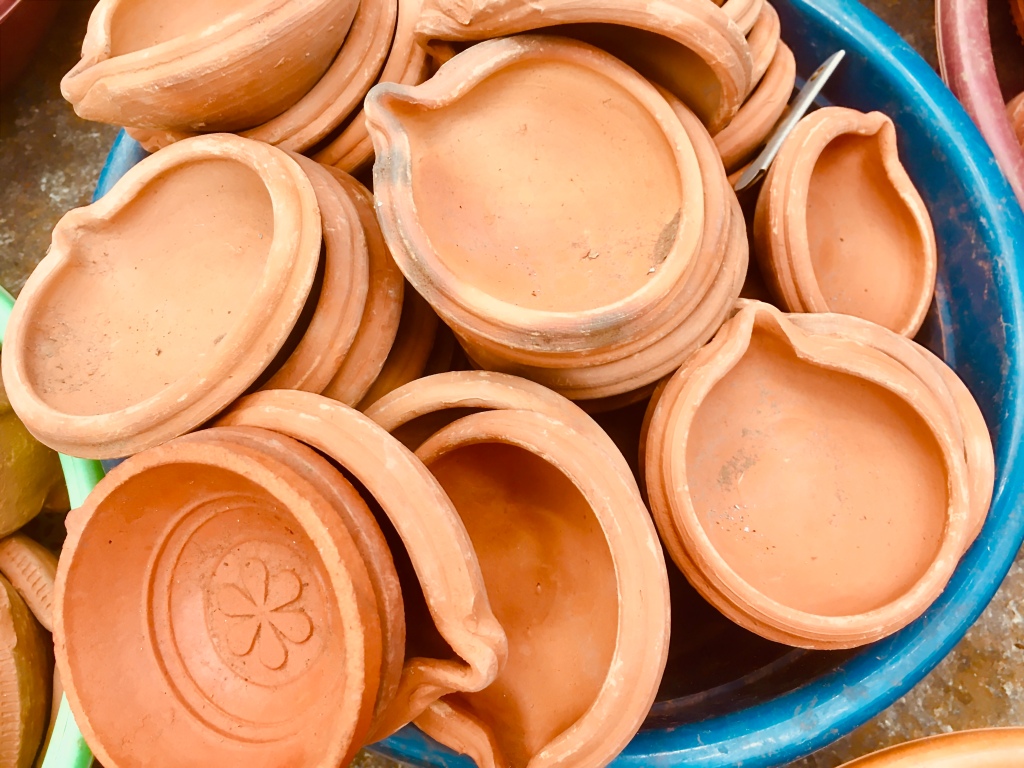
Handmade earthen lamps stacked in a plastic bowl
Lamps made of clay have a native charm. The handmade red-ochre deepa are traditionally made by potters, painstakingly following age-old pottery techniques. Earthen Pottery in India can be traced back, historically, earlier to 2,000 BCE, or beginning of the Harappan civilisation.
Scouring Bangalore’s markets for handmade earthen lamps/deepa was a learning experience. Though we had always sought earthen lamps, ‘handmade‘ was of special focus this Deepavali – for various reasons – a) they are easier to make, b) consume lesser clay per piece, c) easily return to earth, d) of course, cost less.
The potter’s clay is a mixture of soft soil taken from river basins and village tanks, fertile soil from irrigation water-structures, and sand from river beds. The mixture is wetted with water, left for a week to sag and then stomped continuously for a couple of hours for a smooth texture. The softened clay is then hand-crafted into little deepas. Once the wares are made, they are left to dry in the sun for two days (coloured with red-ochre in some areas) and then baked in an earthen oven / kilns at 120 degrees for 12 hours. Stacks of hay, field-straw, twigs and even dead branches of native trees are used as fuel. Naturally, earthenware flourished in the regions where large perennial-rivers flowed. Though few rivers died (like the Saraswati), the craft sustained or adapted to new situations.
Across India, regional techniques of clay pottery evolved over centuries, and continues to this day – most notable are: Kangra in Himachal, Mansa, Bankura, and Midnapore in West Bengal, Alwar and Molela in Rajasthan, Nizamabad and Prayagraj in UP, Kutch and Saurashtra in Gujarat, Delhi-Haryana region, Thane and western Maharashtra; in the South, the loamy soil of Manamadurai and 15 surrounding villages in Tamil Nadu dominate the deepa market, while Kerala’s Peringottukurissi near Ernakulam, Peruvemba and Ezhumangad near Palakkad, Doora in Mysore dist, Khanapur near Belgaum, Chitoor dist of Andhra, and n small pockets of Konkan, Goa and Pondicherry are the others.
Many of the potters, Kumbhars (kumbh – pot), have carried their regional traditions over generations. Of them, very few continue to make deepas by hand – most have switched to moulds. Down a slippery slope, the art is on the wane – lack of skill lead in the current generation led to poor quality and resultant breakage (both handling and transport). Evidently, moulded lamps are more sought after by makers and sellers. Historically, there have been many forms / types of lamps used in festivities, including stone, brass, bell-metal, silver, even gold. Temples especially preferred deepa stambha (pillar of lamps) made of stone (granite of choice).
Elaborately decorated, intricately carved Deepa Stambha of single granite rock, at Sri Harihareshwara Temple, Harihar – built in 1224 AD by a Hoysala general Polalva
A potter uses ~75 kgs of clay for a thousand handmade deepa of 2” dia in a day; while moulded ones require almost double the quantity but lesser time. Cost-wise, handmade ones sell Rs. 30 per doz in the cities, for simple elegant types without flashy paints, kitsch; while mould ones cost double. Traditional deepa are preferred, but lesser in demand and the cheap imported plastic items have taken over the scene.
Led fairy lights, plastic/paper lanterns, or wax candles, pale in comparison to the warm-glow of the earthen lamps – they are not only friendly to the earth but also provide livelihood to the thousands of kumbhars, who live in poverty and infinite-debt.
The lady from whom I ultimately bought the handmade lamps revealed that 90% of earthen lamps sold in Bangalore come from TN. Our own Pottery town is in shambles, as many potters shifted out over the years, and those who have remained are content making commercially viable articles like planters, water-pots, even kulhads / tea-cups. Deep search yields moulded earthen lamps upon coaxing, that too in joint-family-homes where older generations still exist.
Lighting lamps are a means to not only get rid of darkness, but also denotes dispelling anger, greed, hatred and all such unwelcome feelings. The lamps also stand for good luck. The traditional deepa were lit using cow-ghee or til/sesame seed oil or coconut oil in coastal areas with wicks made of cotton; but recently, various oils and blends are used in the name of ‘deepam-oil’.
A lamp lit with ghee emits satvik vibrations and thus completes the wholesome spiritual experience. an oil lamp too emits positive vibrations, but at a lesser frequency. It is also said, the fumes and heat generated from a ghee-lamp are beneficial in health perspective; which isn’t the case with oils, especially the recent blends, which contain mineral oil (refined waste machine-oil derived from petrol), Paraffin, and Palm oil.
Did you know? Earthen lamps, called Deepa in Sanskrit and its derived dialects across India, diya in Hindi-Arabic, vilakku in Tamil-Kerala, pramida in Telugu, matira-pradipa in Bengali, among others. Terracotta originated from terra cocta, meaning earth-baked in Italian, and includes both glazed and non-glazed pottery. It has come to be used as a common term for all earthen items across the world.
A Sanskrit shloka encapsulates the essence of lighting a lamp:
शुभं करोति कल्याणमारोग्यं धनसंपदा । शत्रुबुद्धिविनाशाय दीपज्योतिर्नमोऽस्तुते ॥ That which bestows auspiciousness, health, wealth and prosperity, which destroys inimical feelings and hatred, Salutations to the light of the lamp!
This year, Deepavali is special; the world is going through a tricky but deadly pandemic, which is seen waning one day, but resurfacing with a vengeance the next! India is the second most affected nation and there isn’t a cure worth of mention. Precautions to avoid Covid-19 ought to continue, and festivities should be muted, celebrated in spirit.
So, keep it earthy, simple, and stay safe!
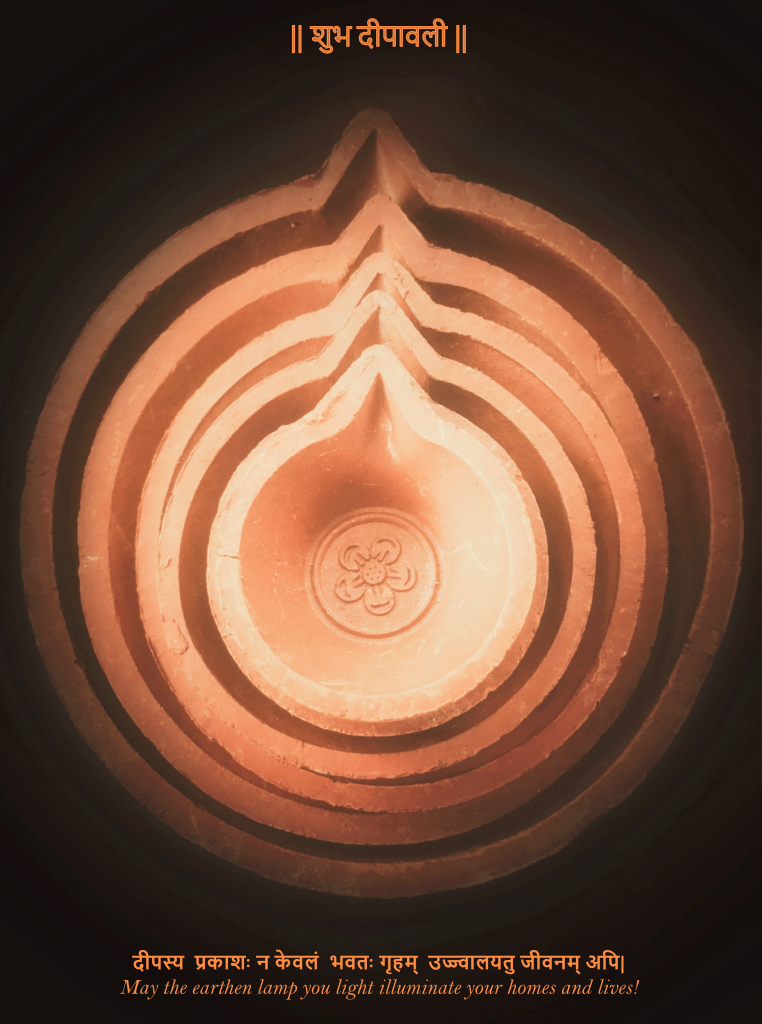
Shubh Deepavali! शुभ दीपावली!
Images in this post belong to the author. Information gleaned from various sources, incl kumbhars,sellers and the net.
What may seem like harmless lifestyle habits may really be robbing you of your get-up-and-go.
Let’s face it: we all get more fatigued as we get older. It’s part of the aging process: we lose mitochondria (energy-producing engines in the cells) and we produce less adenosine triphosphate (ATP) — the molecule that delivers energy to cells throughout our body. Other causes of fatigue, such as medication side effects or chronic illness like depression or heart disease, can increase the feeling of tiredness or sluggishness.
But age- and disease-related factors aren’t the only drains on your energy. Your lifestyle habits may be to blame for some of your daily fatigue. The following energy zappers are common culprits that you can change.
Inactivity
We naturally lose muscle mass as we age. “If you have less muscle mass, you have fewer mitochondria and less ATP,” points out Dr. Marcelo Campos, a primary care physician with Harvard Vanguard Medical Associates in Boston. Being sedentary compounds the problem by weakening and shrinking muscles and causing them to use energy inefficiently.
Physical activity strengthens muscles, helps them become more efficient and conserve ATP, and increases the production of energy-producing brain chemicals. Don’t be intimidated by the recommendation of 30 minutes per day, at least five days per week, of moderate-intensity exercise. The 30 minutes can be spread out into several shorter periods. And you don’t need to break a sweat. “Whatever exercise you can do will help,” Dr. Campos says. “It can be simple, like climbing stairs or walking farther in a parking lot.”
Few minutes of Dhyana (meditation), Pranayama (simple deep-breathing), Yoga (a doable Suryanamaskar) will add immense value to your daily routine and enhances metabolism which in-turn improves overall health. Pick-up an active hobby, like Gardening. You will realise that in a month of working with plants, seeing them grow – producing flowers/fruits, the chirping of birds, butterflies and bees hovering around your green patch, brings much positivity and a sense of well-being.
Too much stress
Chronic stress can increase levels of cortisol, a hormone produced by the adrenal glands. “Cortisol reduces production of ATP and it increases inflammation, which also reduces ATP production,” explains Dr. Campos. However, stress-reduction techniques are associated with lower cortisol levels. Try yoga, mindfulness meditation, tai chi, breathing exercises, or guided imagery. Even 10 minutes per day can help. Take a walk in a park, see the greenery around, try walking barefoot on grass, deep breathe, and connect with nature.
A poor diet
If you’re not nourishing your body, you won’t have the vitamins and minerals necessary to produce enough ATP, and you’ll feel more tired. “Eating too much processed food can increase inflammation, which impairs the production of ATP and energy. Or, if you’re older and your appetite isn’t what it used to be, you may not give your body the calories and fuel it needs to function,” Dr. Campos explains. On the flip side, if you’re eating too much food at one time, that can cause blood sugar spikes and lead to fatigue.
The fix: eat whole foods, including vegetables, fruits, whole grains, and lean proteins like fish, chicken, nuts, and seeds. The fatty acids in protein-rich foods also help boost ATP. And aim for smaller meals with snacks in between to provide your body with a steady supply of nutrients and fewer blood sugar spikes.
Too little sleep
A lack of sleep increases cortisol and also promotes inflammation. If sleep issues are caused by sleep apnea (pauses in breathing during sleep), the dips in blood oxygen levels lowers ATP and energy.
Talk to your doctor about underlying problems that may rob you of sleep, such as health conditions (sleep apnea or frequent trips to the bathroom) or medication side effects.
And work on improving sleep hygiene: go to bed and wake up at the same time each day, and keep your room cool, quiet, and free of electronics, which stimulate your brain. Do what keeps your mind clutter free and happy. Develop a reading habit; books are our best friends.
Poor fluid choices
Drinking sugary carbonated drinks (soda-any colour/flavour) can cause blood sugar spikes followed by a drop that causes fatigue. Being dehydrated can also make you feel tired, as can drinking too much alcohol or caffeinated drinks near bedtime (alcohol interrupts sleep in the middle of the night). Healthy people need six to eight glasses of fluid per day, and more if they’re exercising. Avoid soda. “And stop drinking caffeine or alcohol within six to eight hours of bed,” Dr. Campos advises.
Social isolation
Being isolated — not seeing others on a regular basis — is associated with depression, and depression is linked to fatigue. “The power of interacting with other human beings and connecting with others can bring a different outlook and give you more energy. We are learning more about this. We probably produce different types of brain chemicals that make us happier and give us more energy when we connect to people,” Dr. Campos says. Resolve to get together with others at least once per week. It can be friends, family, neighbors, or even new acquaintances.
If you can, pick a cause or join a community that works on social welfare; it’s not necessary to be charitable to be public-spirited – a kind heart with an attitude to serve is good enough for a start.
When is low energy a problem?
“If fatigue is affecting your day,” says Dr. Campos, “or if fatigue is accompanied by any other symptoms like headache, muscle or joint pain, fever, or stomach or urinary problems, it’s time to see your doctor.”
The most popular phrase in corporate circles. Scratch the surface and the dust clears; before it settles down, lets take a quick peek…
When the team works, there is camaraderie, sense of togetherness, and all those good things, but also there are those who may not be in sync with the performers within the team. While routine housekeeping, I stumbled upon John Murphy’s Pulling together, about extraordinary power of teamwork. An empowering word, indeed.
At the center of every high performance team is a common purpose — a mission that rises above and beyond each of the individual team members. To be successful, the team’s interests and needs come first. This requires “we-opic” vision, a challenging step up from the common “me-opic” mindset.
Effective team players understand that personal issues and personality differences are secondary to team demands. This does not mean abandoning who you are or giving up your individuality. On the contrary, it means sharing your unique strengths and differences to move the team forward. It is this “we-opic” focus and vision—this cooperation of collective capability—that empowers a team and generates synergy. A word of encouragement could open up to enhancing expertise or direct to acquiring a new skill or which in fact would improve the chances of team’s success.
Cooperation means working together for mutual gain—sharing responsibility for success and failure and covering for one another on a moment’s notice. It does not mean competing with one another at the team’s expense, withholding important data or information to “one up” your peers, or submitting to groupthink by going along so as not to make waves. These are rule breakers that are direct contradictions to the team-first mindset.
High performance teams recognize that it takes a joint effort to synergize, generating power above and beyond the collected individuals. It is with this spirit of cooperation that effective teams learn to capitalize on individual strengths and offset individual weaknesses, using diversity as an advantage. Unity, Trust, Credibility are lofty words interdependent with earthy ones, Support, Nurture, Stability. One set cannot work without the other – just how fresh legs do well with a mature mind; yet we turn to bulls in china shop and seldom see intelligence.
All the same, a leader is expected to share the successes as well as the failures, as co-operate is not just a term for getting the work done. Leaders set examples and expectations, diligence is a given, unless there are weeds that set off on a tangent and need to be, well, deweeded. When the team leader is honoured, the team does not automatically levitate to cloud-nine; communicate and share the accolades with each person of the team which enabled the win to sustain brightwork. Leaders are born, not often made; what’s not inherent cannot be taught; an old dog will learn new tricks when it comes to survival, and a young pedigree can bark and bite his way through when conditioned. Both are necessary for a team’s survival – a balance of experience and spunk.
Sustained teamwork is not impossible, “You must be careful how you walk, and where you go, for there are those following you who will set their feet where yours are set” – Robert E. Lee
A word or two of encouragement does wonders, but sharing of treats does enhance the ‘self’ multifold. Read confidence, esteem, and worth; now re-read with self as a prefix. Fantastic? Now, another scenario – team starves while leader is overfed, then find the same super team ridden with resentment, insubordination, indiscipline and worse still – rude behaviour. Go ahead, recognize leaders and flood with treats, but encourage the team and share the spoils.
Almost all employees, if they see that they will be listened to, and they have adequate information, will be able to find ways to improve their own performance and the performance of their small group – James O’Toole
In a team, the one on top need not be the leader; the one at the bottom needn’t be a pallbearer. It could just be the one clinking cymbals setting pace, or the one singing, directing the flow!
Companies must realise, that the one talking the most, or the loudest isn’t the best. Oysters make and hold pearls at the bottom of an ocean, while tides ebb and flow all day. The tides’ energy is insatiable and useful but must be harnessed to be useful; pearls are precious and treasured – both in its own world and .
A Leader would know – the value of cumulative power and distinctive brilliance.
a note on how IAQ impacts health, immunity and COVID
The newCoronavirus has certainly had a worldwide impact.
It has become more important now to ensure higher levels of hygiene at our homes and offices.
Indoor air quality is directly correlated with respiratory health and immunity.
It has been documented that bad indoor air quality can enhance Covid-19 risk, especially among elderly and those with pre-existing respiratory problems.
Tips to improve Indoor Air Quality
Keeping it clean –
Avoid floor covering, if you have wall-to-wall carpets then vacuum once a week at least.
False ceilings, panel boards, plastic-plasters, etc., are dust traps; made of artificial gypsum, the heavy metals and chemicals that leach into the air can be troublesome, especially upper respiratory system..
Regular cleaning of bedding, sheets, drapes, cushions, is necessary; with pets at home, frequency may be increased.
Most window blinds, and furnishings, made of base plastic/synthetic fibers, are not desirable since they harm the earth and all living beings; bamboo / wooden chik blinds or furnishings of natural fibers may be used instead. These too must be dusted / vacuumed / washed periodically.
Clear the clutter. Items lying around gather dust and if left uncleaned will attract dust mites which affect the health. Dusting and wet cleaning once a while keeps mites away.
Aerosols –
Aerosol products come in many varieties – spray, deodorant, paint, e-cigarette, and cleaning liquids are just a few that release nanoparticles into the air.
Eliminating using such products can keep the air free of pollutants. Even if the air appears clear, tens of millions of air-suspended solid particles and liquid droplets get inhaled. Despite their minute size, they have major impact on our health and our climate.
Paints have volatile organic compounds that release toxins and particles of heavy metals into air by evaporation. Choosing products with zero VOC is one part, keeping indoors naturally ventilated is ideal.
Ventilation –
Improved ventilation, less mechanical more natural, is recommended to improve air quality.
Efficient buildings are oriented in right direction, designed to allow light and fresh air, cutting off heat. Natural ventilation.
Air-conditioners permit just 1/5th of fresh air per hour necessary for good health. Increased usage causes fatigue, breathing troubles, dehydrated skin and sinusitis. Filters and drip pans need periodical cleaning and replace when worn-out, which also improves product’s efficiency and energy management.
Air purifiers, and Dehumidifiers are effective, but consume energy and require frequent maintenance too.
Smoke particles get trapped into furniture, furnishings and indoor fabrics. Micro carbon and sulphuric compounds pollute indoor air causing cancer.
Houseplants –
Few Houseplants are considered beneficial in eradicating toxins and increasing oxygen indoors.
Plants should not be over-watered because constant damp soil could promote the growth of microorganisms which affect allergic individuals.
Sunning the plants periodically, keeps them healthy.
Pets –
Dander and fur too could affect air quality. Pets need to be cleaned regularly and rid of excess fur. Take care of their health which could affect overall IAQ.
Plug leaks –
Leaking appliances not only drip water, but also promote growth of mold and bacteria – which cause respiratory illnesses like asthma among others. Plug the leaks to promote life of the appliances and good health of self.
Natural ventilation improves air circulation and enhances indoor air quality by reducing indoor pollutants in all seasons. Graded vegetation (tall/medium/short trees, shrubs, creepers, climbers) outside the home is pleasing to the eye, invites a large amount of fauna; tall trees not only keep indoors cool but also mitigate pollution. Shaded windows too keep the summer heat away! (and that’s another topic, coming up)
Keeping doors and windows open as much as possible – is recommended to avoid immune inhibiting causes, that aids in fight against newCoronavirus as well – while washing hands regularly with soap and water, social distancing, and maintaining good personal hygiene are all added bonus to this end.
While this piece is being written, 9.5 lakh people are infected worldwide, increasing by the tens of thousands each day; 48k have succumbed, majority of them elderly and vulnerable with pre-existing health conditions (diabetes, heart, renal, asthma, high bp, etc). There is no known medicine yet, and a vaccine (though under human trials in many countries) is many months away. enhancing immunity or maintaining a good health is imperative to keep COVID-19 at bay. Eating whole-cooked vegetarian food does help, as does robust hygienic practices.
I am sure we are all following good-hygiene practices – in the wake of newCoronavirus. – especially the 20 second hand-wash routine for #safehands, #socialdistancing, to contain spread of the virus.
While we are at it diligently – keeping ourselves safe from the Coronavirus – an eye on the environment would surely be an added bonus.
Let us remember – water is a vital, limited, natural resource. But it can be replenished, if we are as diligent in using it as much as our health.
Monsoon in 2019 had progressed at the slowest pace in at least 12 years, and this year is predicted to be hotter than earlier.
Nearly 60% of all our reservoirs run dry by June every year, and is largely dependent on monsoon rains to replenish.
One billion people in India live with physical water scarcity, of which ~60% live in areas that are under extreme water stress.
WHO estimates 1 in 9 people worldwide do not have access to safe and clean drinking water.
Of the 17 most water stressed countries worldwide, India stands at 13th, with maximum rainfall among them.
Groundwater is at its lowest in decades, with experts predicting that at least 15 of 21 cities in India will run dry in 2020 – we are already there!
Consecutive years of drought and unviable agricultural practices hasn’t helped the matters either.
We live in urban homes, with running tap water and must feel lucky to be among 3% of the world’s population.
India has just 4% of global freshwater, but 16% of world’s population – this gap can be filled only by prudence and affirmative actions.
It comes back to the question – what can we do? Well, we definitely can.
If your home has Roof-top rainwater recharge/reuse structures, now is the time to carryout maintenance, clear filters / silt-traps. (a 100 sqm roof top can conserve 1L liters rainwater pa)
If your home has groundwater recharge pits, check for debris, desilt; if not create one . (a 3’ x 10’ pit can recharge ground with 60kl pa).
Replace filters of water purifiers; utilize waste water of RO water purifiers for all cleaning purposes except direct consumption / cooking.
Install low-flow aerators to your taps that can reduce water flow by 1/3rd. A 3 liter per minute aerator means, <1 liter per 20-second hand-wash.
Recycle grey water; use recycled water for flushes. Wherever feasible, arrange to install a water treatment facility. Almost 80% of waste water goes untreated; recycling can reduce 50% of stress on freshwater.
Choose your products of use wisely; make the shift to natural, sustainable, low water and energy consuming, locally available options.
Safe Hands | Save Water!
Stay Safe | Stay Healthy!
Source: NitiAayog, WHO, TOI, CSE, DTE
The earth, the air, the land and the water are not an inheritance from our forefathers but on loan from our children. So, we have to handover to them at least as it was handed over to us – Mahatma Gandhi
Holi is the festival of colours and shared joy. The spring festival symbolizes
Widely celebrated in the North, over the years it has gained a pan-Indian’s fervor. Young and old, men and women participate equally with gusto. Who can forget shaking a leg to dholak beats and phagun folk songs, or dancing with gay abandon to popular cinema songs, squirting coloured water at each other with water-guns…. There was the odd person/kid who would hide, runaway terrified of getting coloured only to be chased down – some would join with a bit of cajoling, few locked themselves shut.
While kids continue fun’n’frolic, elders would sneak away to delightful helpings of bhang-spiked or plain laddoos, gujia, thandai or lassi. Gradually, Bhang became rarer being officially banned, and alcohol took over the festivities. Bhang is a mixture of dried-ground leaves and buds of Cannabis sativa; technically therapeutic in small quantities, addictive in long term consumption – leading to hysterical paranoia and depression.
Colours became synthetic and nobody realized or even cared as long as it was cheap and easily available – all through 80’s and 90’s, when even metallic paints like silver were used – and their effects went largely unreported. It was a recent drive – a decade ago helped by the internet revolution, that the harmful effects of chemicals came to light and awareness of organic colours grew (used since time immemorial – well at least from the start of mythologies about Holika and Prahlad, festivities during the time of Rama and Krishna, etc.)
Below is a list of colours made naturally, at home, using commonly available flowers, vegetables, flour; I have also highlighted the chemicals that are avoided and their effects on humans.
Colour
Dry use
Wet use
Chemicals avoided
Red
Shade dried red hibiscus flowers / Red sandalwood powder, mixed with flour of rice/chickpea (1:1)
Red-sandalwood powder mixed in water; Diluted limestone powder (chuna-100 gms in 10 ltrs) mix with 100 gms turmeric – dilute and use
mix (1:2) turmeric + chickpea flour Dried marigold, yellow chrysanthemums, cosmos; A mix of sandalwood powder and rice flour (1:2) for pale yellow.
Boiled pomegranate peels Boiled or soaked pomegranate peels for pale yellow, add turmeric for deep shade; strain, dilute, use. A pinch of saffron if affordable; Raw turmeric root, shredded and soaked overnight, diluted
Lead oxide – irritability, skin and vision disorders, brain damage, poisoning
Green
Dried Henna leaves, green leafy veg like spinach, dry amla powder Dried neem/methi/mint/coriander leaves – powder, mix with rice flour/besan
Soaked henna leaves overnight; paste of pudina / spinach, neem – mix with water and use; Grind wheat-grass diluted in water for light green
Mix mehendi leaf powder and amla powder, dilute with besan
Kaththa (Acacia catechu) powder (used in paan)
Chromium iodide – respiratory issues
Dark brown / black
Mix of all above colours! Dried amla powder, mix with besan
Soaked gooseberry overnight in an iron vessel; strain, dilute, use Boil few tea/coffee-leaves (one table spoon = 2 ltrs colour), strain, dilute, use. Boiled / overnight soaked henna leaves Charcoal soaked overnight, strain, use
Lead oxide – nervous damage, renal failure, mental disability
In addition to the chemicals listed against each colour, there are harmful substances like Nickel, Cadmium, Zinc, Iron, , mica, asbestos, gypsum, silica. Remember – using chemical and metallic colours is like taking a shower with the contents of an alkaline battery! While we love to enjoy, we also have the responsibility to safeguard ourselves, our families and the environment from toxins.
Colour me naturally
This list is just indicative of natural colours; there are many Grandma’s recipes for homemade colours; but should all this delightful process of making your own colours is too much of work and a quick purchase of colours is unavoidable, there are various options now to buy naturally made colours, some listed below:
Petalists: Their colours are made by recycling flowers collected from Temples and Wedding halls, by mixing with other non-toxic ingredients mentioned earlier. The flowers used to make the colours give them a natural and mild fragrance as also a soft texture. These are dry colours which being very easy to clean, are skin-friendly and suitable for people of all ages, including kids.
These colours are carefully packaged using zero plastic, making it totally pro-environment. Significantly, it generates livelihood for over 200 persons with intellectual disability, offering them a dignified source of income (Patients of Nimhans in Bangalore, undergoing psychiatric treatment, whom I have personally visited and seen their laborious colour making process). more on this visit shortly.
Phool is another organization that collects flowers from temples of Varanasi to make fragrances and Gulaal.
Others: eCoexist’s Rang Dular | Redearth India’s Swarang | Greenpractices, but of course, online portals like Amazon have many brands.
Notes to Colour
Call them by any name – organic, natural, herbal, floral, satvic, traditional, eco-friendly, earth-sensitive, etc. they must be made of naturally grown items. These natural colours are safe for the skin, hair, eyes, and even if ingested by mistake, they do not cause any harm.
Natural colours require less than 1/3rd of water required to remove chemical / commercially available colours.
Use of rice flour and chickpea flour is better than using maida, starch or talc, as the powders are heavy, with less dust that reduces absorption by lungs. Sandalwood powder adds aroma to Blue, Brown, Purple,
For Dry powder colours just dust off, before rinsing. For wet colours, if skin stains, they will wear-out with a bath or two.
Whether you use dry/wet colours, clothes will stain – be aware. Wash them quick enough so as to reuse/recycle.
In this era of water shortage, and conserving water is necessary, it is best to avoid wet colours, or water hosing.
Use of dried flowers is the best! But since we are used to the habit of showing off dyed clothes and stained skin, colours become necessary.
The camaraderie, community celebrations, the feeling of ‘playful togetherness’ and ‘shared joy’ is more important than amount of colour used, it doesn’t harm to be frugal. Let’s not buy tonnes and get bored.
No to Colours
Among the big no-no’s, other than synthetic colours and wasting water are – water-balloons, metallic-colours (gold, silver). These ultimately pollute our rivers and oceans!
A no means no! If one doesn’t enjoy getting coloured, please let them be – sport needs spectators too to cheer!
For those who are not the colour-filled kind, find a place to plant a tree that gives beautiful colourful flowers – or gift a packet of colours to a poor kid – spread the cheer!!
No plastic! Refuse to use plastics and disposables (incl tetrapaks, paper cups, juice/water bottles, plastic pichhkaris), tissues, food-waste and recycle bottles if used..
While on the topic of being earth friendly, there are delightful recipes for natural juices
Palash based – a cool juice from dried flowers, infused with saunf and sweetened with jaggery! add crushed mint leaves for additional flavour.
Saunf based – which doesn’t require any hard word, except soaking the required quantity overnight and to add a zing to this drink, a dash of soda will do perk it up!
Cucumber based – ground cucumber juice diluted in water, with a hint of jaggery is a surefire cooler on a warm spring afternoon!
India’s thirst for EVs (Electric Vehicles) received a major push in India’s Union Budget of 2019-20, and is expected to improve further in the budget of 2020-21 and thenceforth.
In March 2019, India’s union cabinet approved setting up of a National Mission on Transformative Mobility and Battery Storage, to drive clean, connected, shared, sustainable and holistic mobility initiatives. The proposed capacity target for lithium-ion battery-manufacturing base has been raised to 50GW from 40GW. The government is in the process of tendering for set up of 50GW battery manufacturing base at around US$50 billion investment.
While this is good news, there is total ignorance among majority of general public.
“At Mahindra AGM our shareholders asked us when are we getting into EVs. If after producing and selling EVs for 9 yrs, after having 5,000 eCars on the Indian roads, after 135 M eMiles behind us if our share holders don’t know that we make EVs, we have failed in our communication,” said Dr Pawan Goenka, the head of Mahindra, a day after the recent AGM in Mumbai. Mahindra have the most diversified indigenous range of e-auto products in India currently – the sedan E-verito, e-Supro minivan and E2O+ Hatch as also 3-Ws Treo and e-Alfa mini. Mahindra is setting up an advanced Lithium-ion battery plant along with the Korean LG Chem at Chakan near Pune – half-a-million modules per year.
Indian rules say that assembling cells within the geography of the country is enough to quality under Make-in-India. This means, the cells are imported – largely from Taiwan and China, and doesn’t have the competence to manufacture the cells itself. The recent COVID-19 situation and resultant lockdown in China has led to severe shortages of various types of rawmaterial used in a wide variety of industries, including EVs – prompting Mahindra to state that BSVI roll-out would be delayed, while mobile companies said they could shut for at least a 10 days – if things don’t improve at China and components supply is hampered further.
In an already weak manufacturing situation (Auto sales down ~40% in 2019-20), this is the last thing that industries had expected / wanted. But viruses have a mind of their own, and our minds are clouded. This was an opportunity for Indian industries to step-up and grab their share of the global market. Well, elephants seldom dance, let alone fly, and panic when in stress; Elephants are cute and majestic, though!
A lithium-ion battery accounts for 40% of the total cost of an EV. Toshiba-Denso-Suzuki JV has invested in a 1,100 cr lant in Gujarat for Li-ion batteries. Panasonic plans to step into this field as well. an EV battery manufacturing set-up could cost ~200 crores, which only deep pockets can afford. While collaboration could mitigate the technology development costs, everyone prefers to climb the wall to discover the struggle for themselves. Mahindra on its part is willing to find synergies with Tata Motors.
EVs must fire-up before losing charge
The recent Auto Expo 2020 at Noida in Feb, threw up 18 EV startups and their wares – autos, mopeds, bikes, scooters and a Bus. Of all, only one was Arai certified, the rest being concepts. AutoExpo 2019 had 11 startups, but majority of them haven’t seen significant growth nor have captured the market.
Large Auto companies – Mahindra, Tata motors, Maruti and Volkswagen too displayed their current options and concepts; remains to be seen how these get accepted by the public. In the period Apr-Dec 2019, only 1,554 4W EVs were sold! A host of launches were made by Kia, Tata and Hyundai, and their marketability remains to be seen, in the tepid waters. The fate of EVs from BMW, Mercedes is anybody’s guess. An improvement in the EV market was the jump in sales – 2017: 56,000 EVs, 2018-19: 759,000 EVs – mostly in 2W and 3W. The crux is – individual 4W-EVs sales is not forging ahead as anticipated and the current numbers are largely of call-rider companies purchases. Experts believe that current crop of 4W-EVs are at best a second car, and the first time buyer or first choice of car still will continue to be powered by fossil-fuel. How many can afford a Tesla Electric in the world?
Hero Electric (11 2W-EV models!) is gingerly testing waters; Bajaj went retro and announced an Electric version of the legendary Chetak (remember Buland Bharat ki Buland Tasveer? but how Hamara will this Bajaj be, with Rajiv hating the e-word). Elsewhere in the globe, Sony built a Vision-S car; so why not our own Micromax build a Revolt bike? Should big boys have all the e-fun?! Yulu is a flimsy moped, but it is in shared rides cocoon with limited mobility, I was petrified riding one for 300-mtrs at a stretch. Then there are the Okinawa, Battre, Ultraviolette, Tork… all e-attempting. There is a star, though, in Ather, powered by ex-Flipkart’s Bansals, Tiger Global and Hero Motocorp, which seems to be leading in the 2-W market for now, and intends to invest Rs 635 crores for a manufacturing plant at Hosur, which will double their current capacity of 40,000 2-W-EVs pa., and have reportedly invested in putting-up 40 public charge stations in Bangalore and Chennai.
Given the cost of charging infrastructure, Govt needs to step in to bolster this critical public infra countrywide (2,346 charging stations in 24 states is a slow start), if it is serious about 2030 deadline (hope it doesn’t peter out like the recent Plastics Ban fiasco!). At present, at SMEV there are 28 EV manufacturing companies in their fold while the rest of the total 72 members are into components alone. https://www.smev.in/smev-members. Can a startup rise to manufacture charging stations in India? An exuberant elephant calf, perhaps?
How green is my power? If fossil fuels are responsible for increase of CO2 in the atmosphere, Coal is a co-culprit with 40% contribution. Besides, when burnt, coal produces pollutants like sulfurdioxide, mercury, and particulate matter which result in acid-rain and damage the environment. Not to mention serious ecological damage done to the forests due to mining and transport. In India, 62.80% is generated by thermal plants, Hydro and Nuclear provide 12 and 2% respectively, while Renewable power is a healthy 23%.
Alternate energy: When we talk of energy sources like Hydel, Solar, Wind and Nuclear energy, they seem to be the best solution. But are they? It is laudable that UN sees India leading the global thrust, but it still doesn’t feature in the list of top 10 countries that are ready to transition into a secure, sustainable, reliable, and affordable alternate energy future. According to WEF, 81% of global energy systems is still dependent on fossil fuels and so is India. Solar panels have a life of say, 25 years, with diminishing performance and degrading of panels; then what? What to do with these panels… manufacturers like Tata Solar, Vikram, Emvee, have no clue, yet. US and Europe are in planning stages with pilots running. Though the panel (made of glass, silicon, plastic and aluminium) is recyclable, it is difficult to extract the web of metals to reuse, and could end up in landfills; but then – where is so much of land? Wind Farms are falling out of favour – with erratic wind patterns, poor generation and transmission losses, maintenance glitches, high initial infra cost coupled with mounting financial burden, not to mention damage to sensitive eco-system in remote areas (dizzy wild animals, dying bees, et al). EV’s batteries are made largely of Lithum which is again a mined RE metal with limited resources worldwide.
Clear Policies: Indian Govt specifically needs to focus on reducing imported parts for EVs if the local industry (already reeling on slackened auto market) has to find their mojo once again. Incentivising home-production and increasing duty on imported CBUs, parts and components, will be a good start – given that EVs require ~800 lesser auto-components than conventional ones (a survey in Germany found out and that it could also mean a million-job-loss). Increasing common charging points in public spaces, a specific policy for end of life battery cases and solar panels that cannot be recycled must be put in place forthwith, or else we will be filling the Earth with more toxins and rare-earth substances in an effort to save fossil fuels!
Alternate Green energy: ET Energy quotes TERI in a recent article, that India’s 18 sq km surface area of reservoirs has the potential to generate 280 GW of solar power, using floatovoltaics; this report was tabled at the recent World Sustainable Development Summit 2020; given the high costs of land acquisition this seems to be an alternate to generating green-energy. China, Japan and South Korea are said to be leaders of this floating-power-generation technology, while UK has the world’s largest farm. Floating Solar Farms, of 50 MW to shortly take-off in Kerala by National Hydro Power Corpn; but before rushing to establish this unique tech, must consider possible ecological damage to the biodiversity and aquatic life. In a study of one such farm by Kyocera TCL Solar LLC at the Yamakura Dam reservoir in Japan found reduction in algal blooms reduced evaporation of water, and the blocking of UV rays, while being difficult to maintain and prone to damage, but on the plus side, the panels generated more power being cooled by the waters below.









 Wise | OtherWise